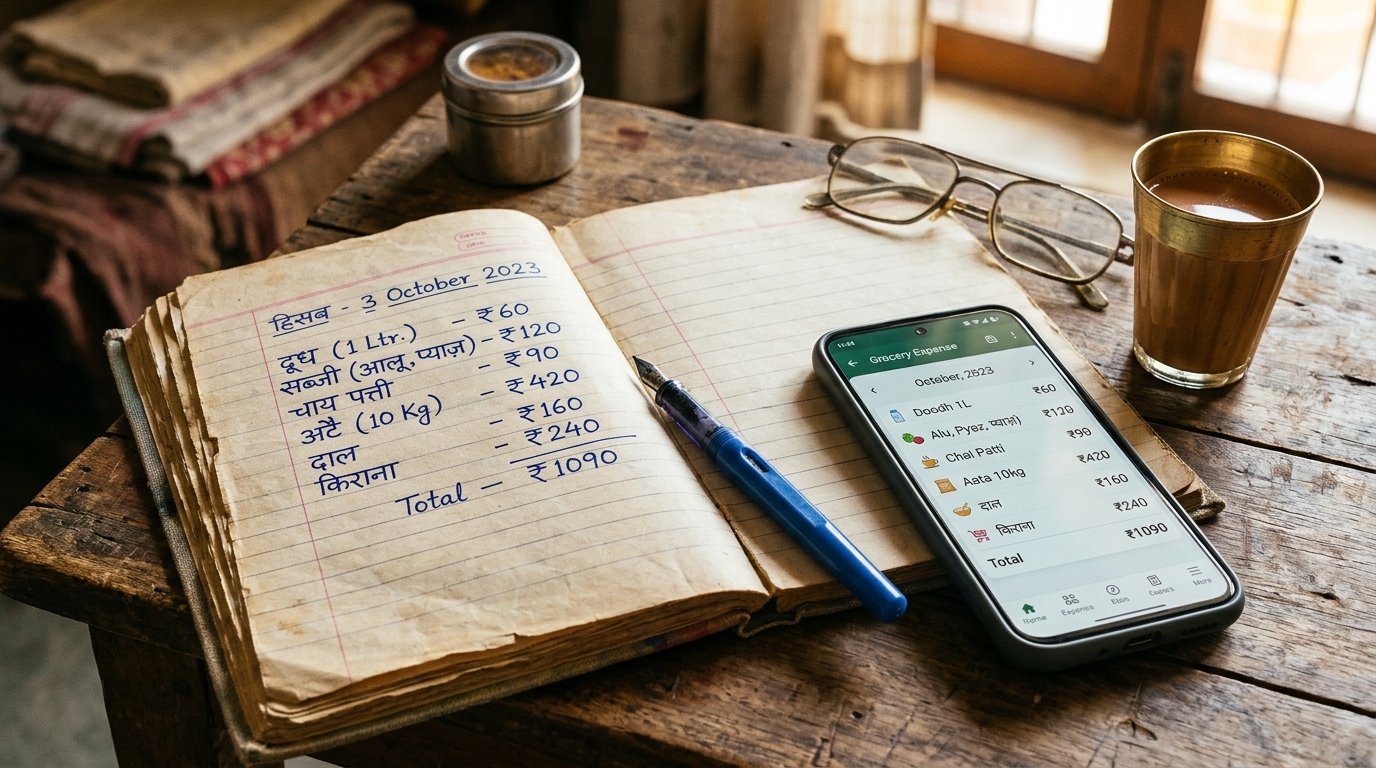
Many Indian households grew up with a hisab ki copy, a notebook where every rupee was written down. The idea still works. What fails is the routine. Here is how to build a daily expense diary that survives past the first week.
Why a daily diary works
- You notice small leaks, like ₹30 chai three times a day.
- You see patterns by week, not just by month.
- You stop guessing at month-end.
A format that is easy to keep
Write only four things:
| Date | Item | Amount | Category |
|---|---|---|---|
| 21 Oct | Auto to office | 60 | Transport |
| 21 Oct | Lunch | 150 | Food |
Skip long notes. You want speed.
The 2-minute routine
- Log as you spend, or at the same time each evening.
- Total the day in a single number.
- Once a week, look at your top three categories.
Why paper diaries fail
- You forget to carry the notebook.
- Totals need manual math.
- Old pages are hard to search.
- Cash and UPI end up in different places.
Moving to a digital diary
A WhatsApp-based diary keeps the simple habit and removes the maths. You send lunch 150 and it:
- Saves the entry with date and category
- Updates the day, week and month totals
- Warns you when a category budget is near its limit
Try today, week or month to see a summary. Read the full guide to WhatsApp expense tracking.
Weekly review questions
- Which category grew the most?
- Which spends were planned, and which were impulse?
- What is one habit I can change next week?
Then set a limit with a budget alert.
Mistakes to avoid
- Waiting until the weekend to log everything
- Making 30 categories (keep it under 10)
- Ignoring small cash spends
Start your digital kharcha diary by messaging XpenseDiary on WhatsApp.