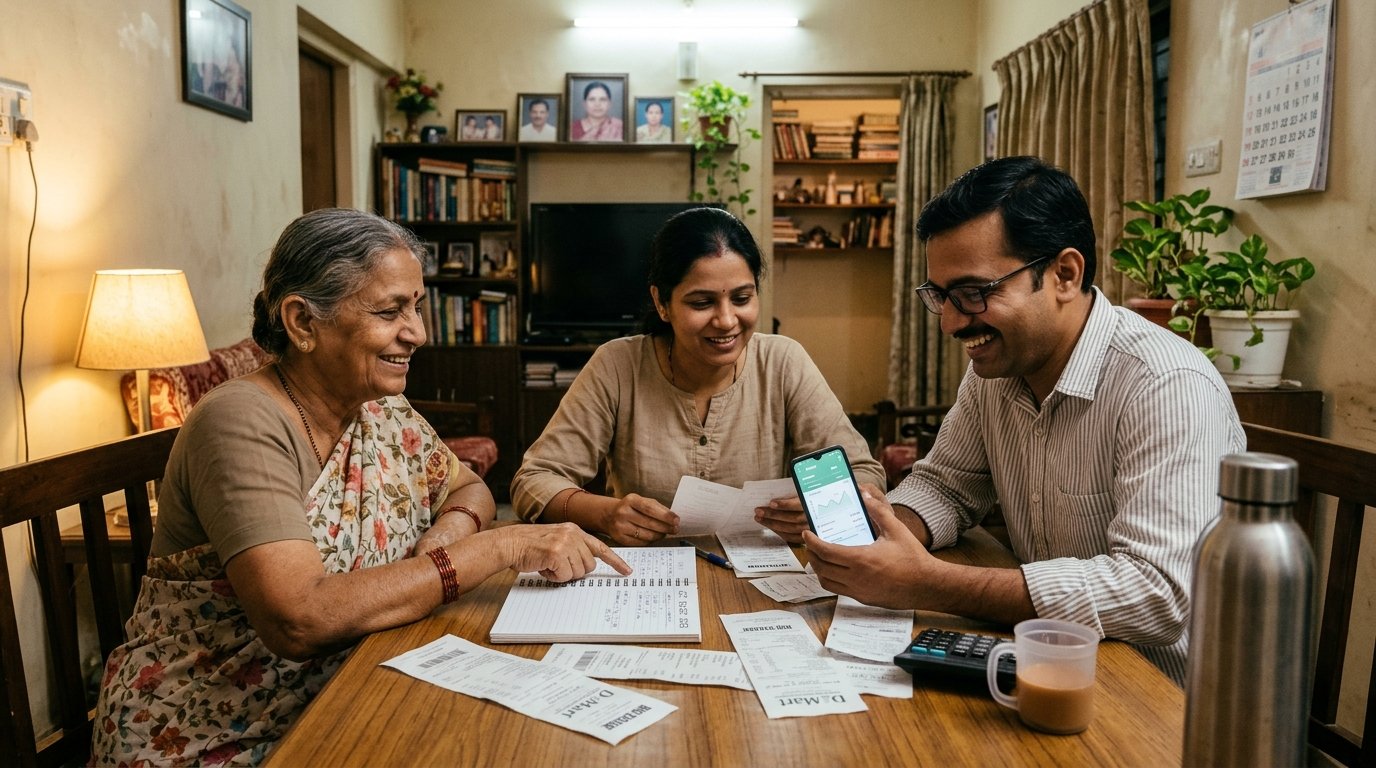
A family budget is more complex than a single person's. There is ration, vegetables, school fees, electricity, medical care, festivals and surprise guests. A clear household budget brings calm because everyone knows what is available.
Typical categories for an Indian household
- Ration and groceries
- Vegetables, milk and daily needs
- Electricity, water, gas, internet
- Rent or EMI
- School and tuition fees
- Medical and medicines
- Transport and fuel
- Festivals and gifts
- Savings and emergency fund
Step 1: List the fixed month-to-month items
Rent, EMIs, fees and insurance. These are non-negotiable and should be paid first.
Step 2: Estimate variable items from real data
Track ration, vegetables and fuel for one month. Then set limits like budget groceries 9000.
Step 3: Add a festival fund
Festivals can break a budget. Divide the yearly estimate by 12. For ₹36,000 a year, that is ₹3,000 a month.
Step 4: Decide who logs what
- One person manages the tracker, or
- Each person sends their own spends to the same number.
Choose a simple rule so nothing is missed. For households with a manager, voice notes in Hindi can be easiest. See voice expense tracking.
Step 5: Weekly 10-minute review
Check:
- Groceries vs limit
- Any unusual spends
- Upcoming bills
Sample budget for a family of four (₹60,000 take-home)
| Category | Amount (₹) |
|---|---|
| Rent/EMI | 15,000 |
| Groceries and milk | 10,000 |
| School and tuition | 8,000 |
| Bills and gas | 5,000 |
| Transport | 4,000 |
| Medical | 3,000 |
| Festival fund | 3,000 |
| Eating out and fun | 3,000 |
| Savings | 9,000 |
Illustrative only. Adjust for your situation.
Involve the whole family
When children and elders see where money goes, they plan better. A monthly family hisab, five minutes at the dining table, can change habits.
Tools that help
- Budget alerts
- Recurring entries for rent, EMI and subscriptions
- Savings goals for education or emergencies
Start your ghar ka kharcha tracker: message XpenseDiary.