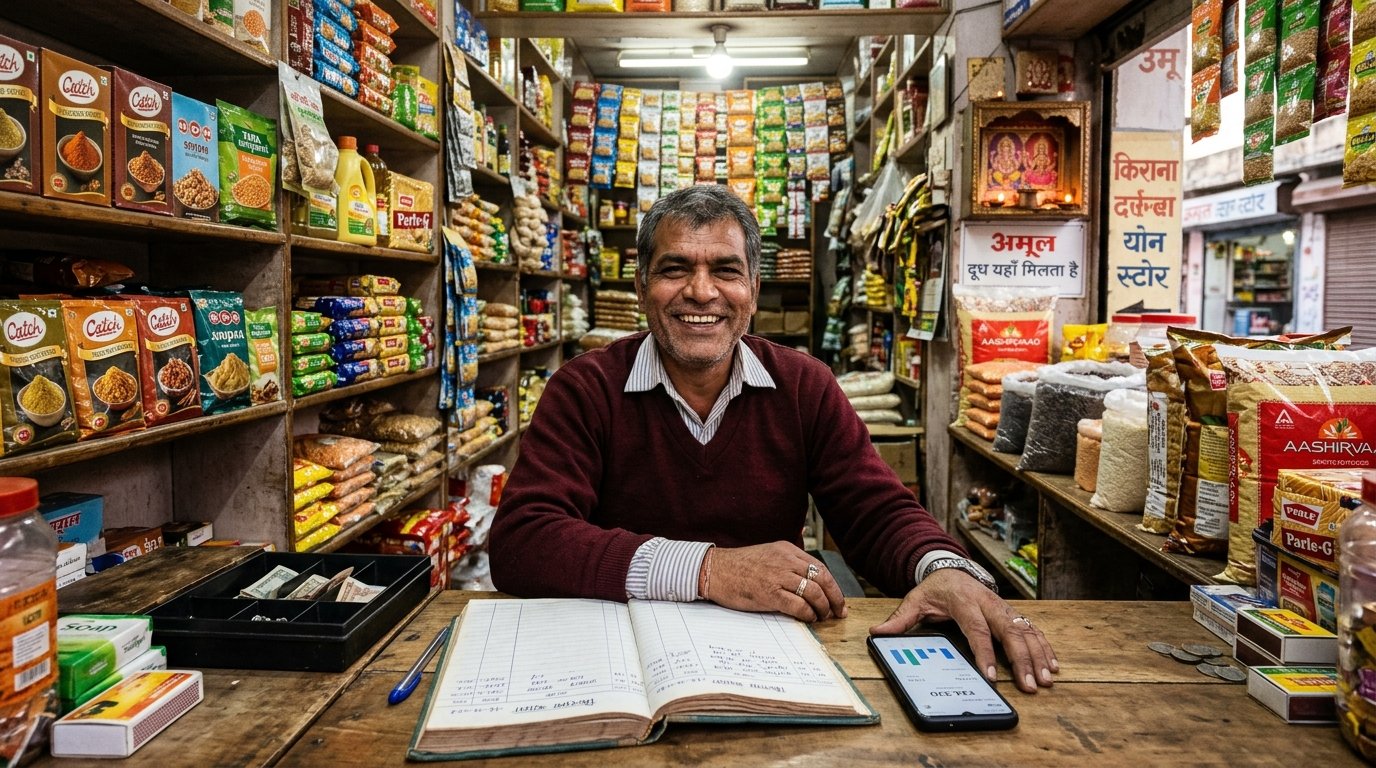
Many small shops in places like Azamgarh, Lucknow and Delhi still run on a paper register. That works until the register is lost, a page is torn or the total does not tally. A simple digital hisab for shopkeepers gives the same clarity with less effort.
What a shopkeeper needs to know
- How much came in today (sales, payments received)
- How much went out (stock purchase, rent, wages, electricity, transport)
- What is the net
- Who owes money (customer udhaar) and whom you owe (suppliers)
A simple daily routine
Morning: note the opening cash. During the day: log big sales or purchases as they happen. Evening: log the day's total sales and any pending items, then check the net.
Logging examples
| Message | Meaning |
|---|---|
+4500 sales |
Income for the day |
stock purchase 3000 |
Expense |
electricity 1800 |
Expense |
worker salary 6000 |
Expense |
1000 Ramesh ko udhari di |
Customer credit |
Ramesh ne 500 wapas diye |
Customer repayment |
Tracking customer udhaar
Customer credit is the biggest risk for many shops. Keep names and amounts in one place with udhari. You can also check one person with udhari Ramesh. For friendly ways to follow up, see asking for money back politely.
Daily and monthly views
todayshows today's totalweekandmonthshow trendshisab monthgives total inflow, outflow and net balance
Which tool when?
A chat-based tracker is great for simple daily hisab. If you need invoices, GST filing, inventory or reminders sent to many customers, you will need dedicated business software. Compare the two kinds in personal khata vs business khata apps.
Some plans offer extra business features such as team members and reports. Check what is available before you commit.
Good habits
- Keep shop and personal expenses separate.
- Take a photo of big supplier bills. See receipt scanning.
- Review the month's net on the last day.
This article is general information, not tax or accounting advice.
Try a simple digital hisab: message XpenseDiary.