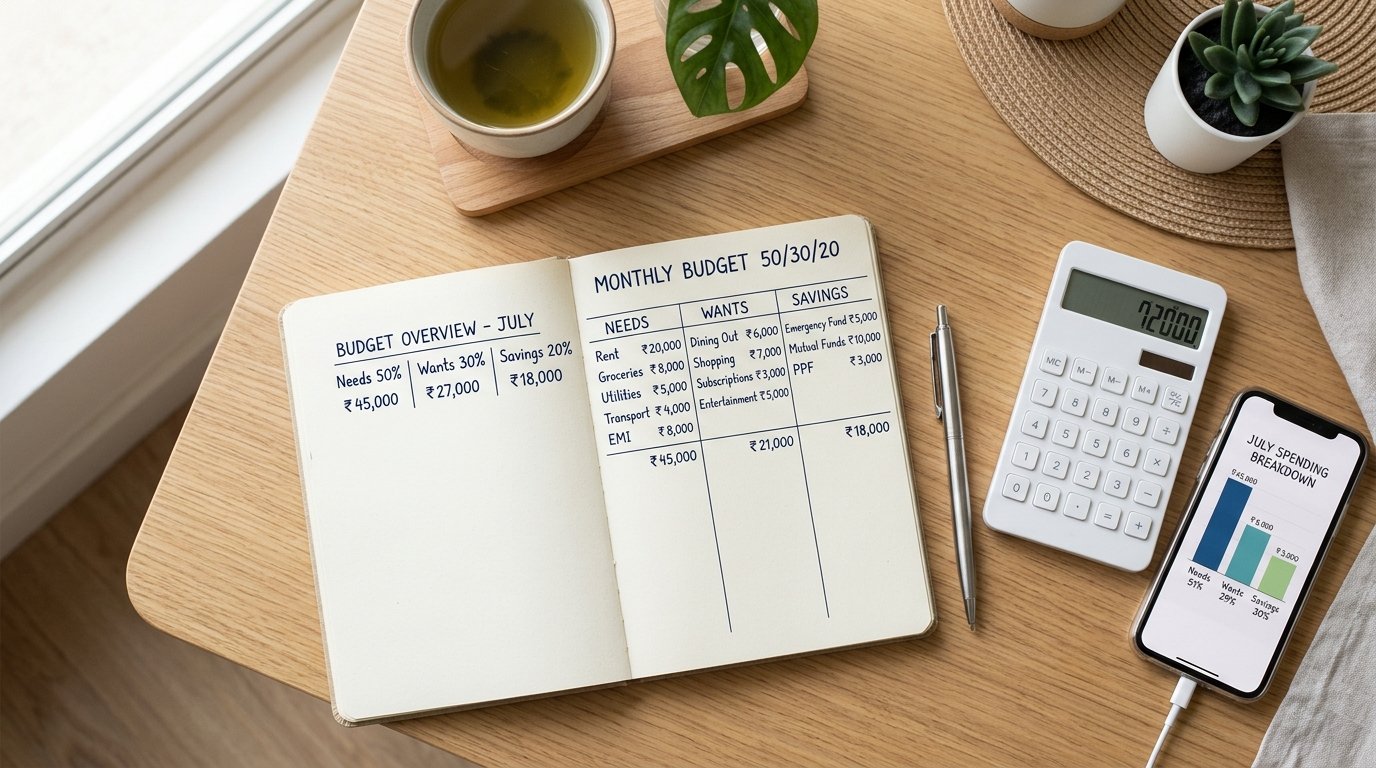
The 50/30/20 rule splits your take-home pay into three buckets:
- 50% needs: rent, groceries, bills, EMI, transport
- 30% wants: eating out, shopping, entertainment, travel
- 20% savings and debt repayment: emergency fund, investments, extra loan payments
It is a rule of thumb, not a law. Use it as a starting point.
Example 1: ₹25,000 take-home
| Bucket | % | Amount (₹) |
|---|---|---|
| Needs | 50% | 12,500 |
| Wants | 30% | 7,500 |
| Savings | 20% | 5,000 |
At this income, rent in a big city can break the 50% limit. That is normal. You might do 60/20/20 instead.
Example 2: ₹50,000 take-home
| Bucket | % | Amount (₹) |
|---|---|---|
| Needs | 50% | 25,000 |
| Wants | 30% | 15,000 |
| Savings | 20% | 10,000 |
Example 3: ₹1,00,000 take-home
| Bucket | % | Amount (₹) |
|---|---|---|
| Needs | 50% | 50,000 |
| Wants | 30% | 30,000 |
| Savings | 20% | 20,000 |
When to bend the rule
- High rent city: try 60/20/20 and review in six months.
- Supporting family: treat that support as a need and shrink wants.
- Heavy EMI: pay down debt faster by raising the 20% bucket.
- Early career: aim for 10% savings, then raise it with each raise.
How to put it into practice
- Map each of your categories to needs, wants or savings.
- Set a monthly limit for each category. Example:
budget food 6000. - Log every expense.
- At month-end, run
summaryand see your real split.
The gap between your plan and your real split is the most useful number in personal finance. Many people find wants are higher than they thought, mostly from small repeated spends. See how to stop overspending.
Quick check
If your real numbers are 70/25/5, do not panic. Move one percentage point at a time. Small, steady changes last longer than dramatic resets.
General information, not financial advice.
Need a basic method first? Read how to make a monthly budget in India.
See your real split: track a month on XpenseDiary.