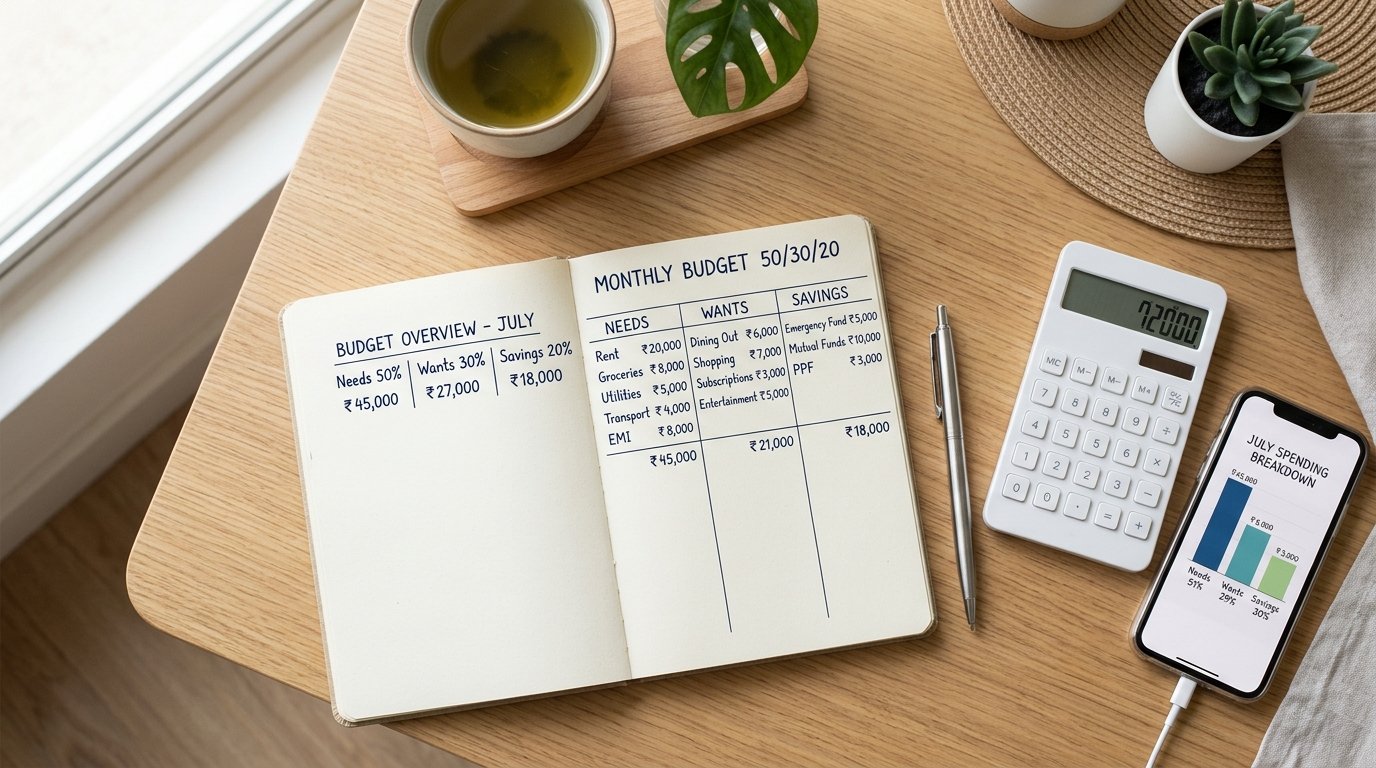
A budget is not a punishment. It is a plan that tells your money where to go before the month tells it for you. Here is how to make a monthly budget in India in five steps.
Step 1: Know your real monthly income
Use your take-home amount, not CTC. Add irregular income conservatively, especially if you are a freelancer. See expense tracking for freelancers.
Step 2: List fixed costs
These barely change:
- Rent or EMI
- Insurance premiums
- School fees
- Internet, phone, subscriptions (see tracking subscriptions)
- Minimum credit card payments
Step 3: Estimate variable costs
These move month to month:
- Groceries
- Transport and fuel
- Eating out
- Shopping
- Medical, gifts, festivals
Do not guess blindly. Track one month first, or review last month's bank and UPI history.
Step 4: Pay yourself first
Decide a saving amount before spending. Even ₹2,000 to ₹5,000 a month builds the habit. Link it to a goal, such as an emergency fund. See how to set savings goals.
Step 5: Track and adjust
A budget that is not tracked is a wish. Use a tool where logging takes seconds.
A sample budget (take-home ₹40,000)
| Category | Amount (₹) |
|---|---|
| Rent | 12,000 |
| Groceries | 6,000 |
| Transport | 3,000 |
| Bills and phone | 3,000 |
| Eating out | 3,000 |
| Shopping | 2,500 |
| Health | 1,500 |
| Savings | 7,000 |
| Buffer | 2,000 |
This is only an example. Your numbers will differ by city and family size.
Setting limits on WhatsApp
budget food 5000sets a monthly capbudgetsshows progress bars- You get alerts at 80% and 100% of a limit. See how budget alerts help you stop overspending.
Common mistakes
- No buffer for surprises
- Too many categories
- Ignoring cash spending
- Setting limits so strict you quit by day 10
Review monthly
On the last day, run summary. Ask what to increase, reduce or keep.
Want a ready framework? Try the 50/30/20 rule in rupees.
Set your first budget: open XpenseDiary and send budget food 5000.