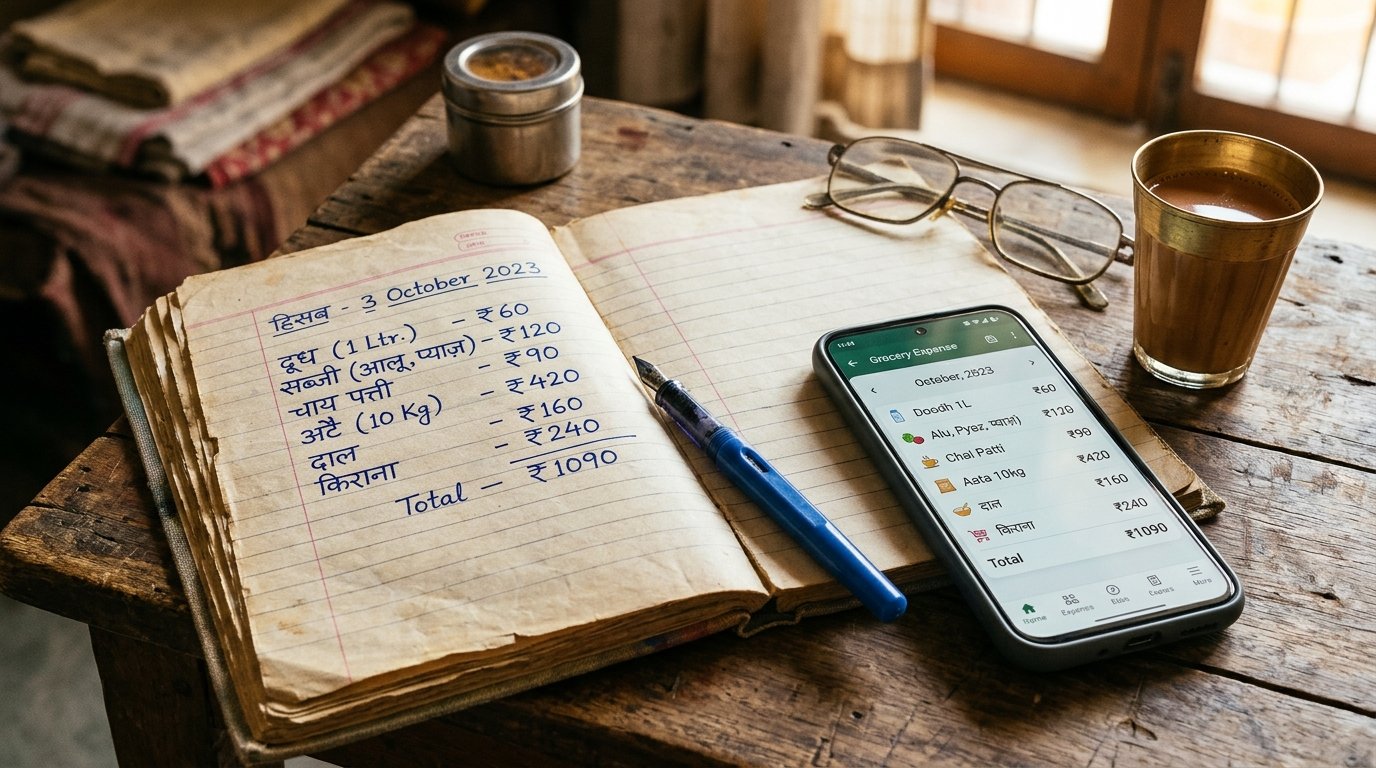
Most money apps assume you think in English. But when you buy sabzi, pay the auto or give money to a friend, the words in your head are Hindi or Hinglish. An expense tracker in Hindi meets you there.
Three ways to write the same expense
| Style | You type |
|---|---|
| English | spent 250 on lunch |
| Hinglish | lunch pe 250 kharch hue |
| Hindi (Devanagari) | २५० खाना |
All three can be logged. Devanagari numerals like २५० are understood too.
Replies in your language
You can also choose the language of the bot's replies:
languageorbhashashows the menulang hindifor Hindi replieslang hinglishfor Hinglishlang enfor English
Words that matter in Hindi money talk
Small words change meaning:
- ko means to (lent to someone)
- se means from (borrowed from someone)
- ne marks who did the action (who paid back)
200 Dave ko udhari di and Dave se 200 udhar liye are opposite entries. A good tracker keeps these words intact. See udhari tracking.
Everyday Hindi terms it should understand
- kharcha, kharch: expense
- kamaye, aamdani: income
- hisab: account or balance
- udhar, udhari: borrowed or lent money
- bachat: savings
For example, send hisab month to get your monthly income, expenses and net balance.
Why language matters for habit
When logging feels natural, you do it more often. People who budget in the language they speak at home are more likely to include small cash spends such as chai, auto and sabzi, which are the ones that add up.
Tips
- Pick one style and stay consistent for a week.
- If a phrase is misunderstood, correct it once so the tracker can learn.
- Use voice notes if typing Hindi is slow.
Send your first kharcha on XpenseDiary in whichever language feels natural.