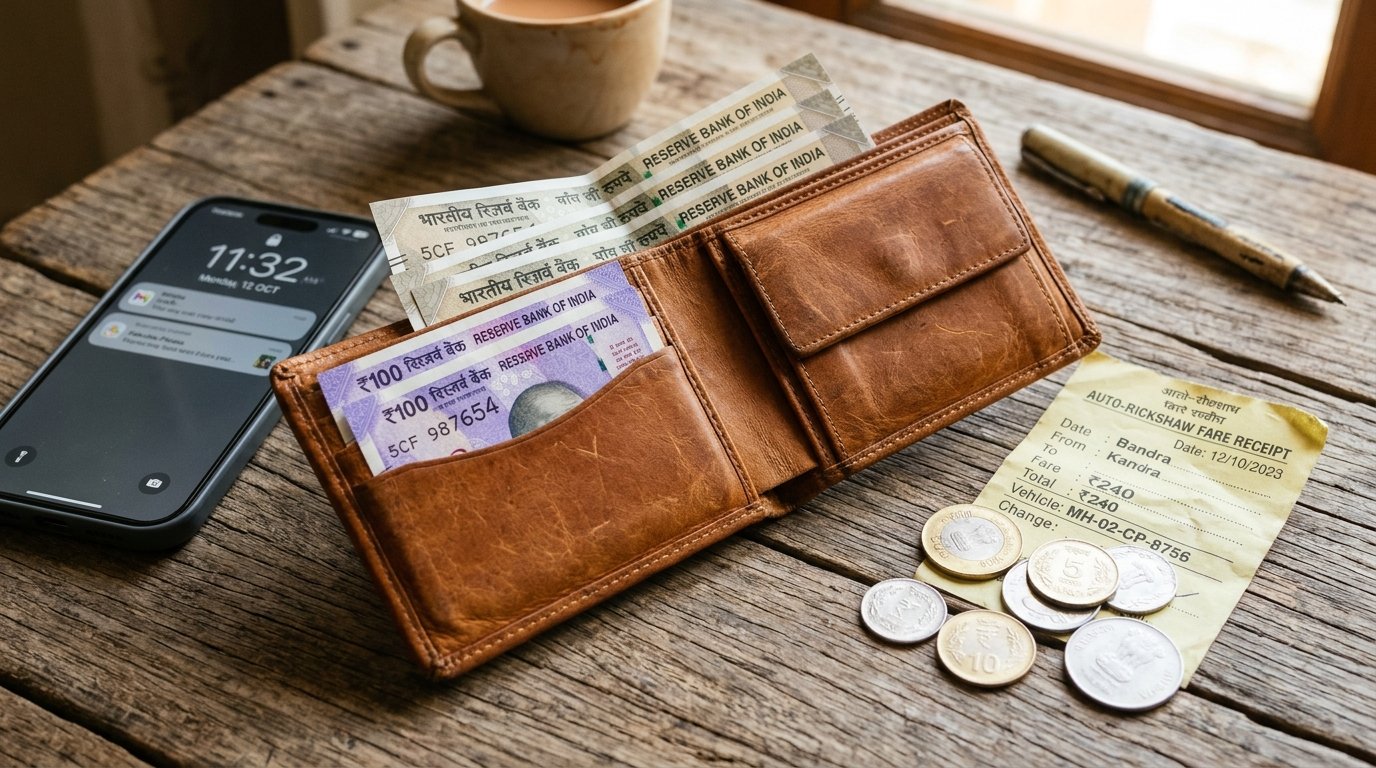
Digital payments leave a trail. Cash does not. That is why many people can explain their UPI history but not where their ₹5,000 ATM withdrawal went. If you want to know how to track cash expenses, you need a method that works at the moment of payment.
Why cash goes missing
- No SMS or bank record for each purchase
- Small amounts feel too small to log
- Change gets mixed with other money
Small amounts matter. A ₹50 snack four times a week is over ₹800 a month.
Method 1: Log immediately
Right after you pay, send a message like sabzi 120 or chai 20. Do not wait. Memory fades in hours.
Method 2: Track the withdrawal, then the spends
- Log the cash you took out:
atm 3000. - Log each cash spend as you go.
- At week-end, compare what you logged against what is left in your wallet.
The gap is your "unknown cash". Aim to shrink it each week.
Method 3: Use a fixed cash envelope
Give each week a set amount, like ₹1,500. When the envelope is empty, you stop cash spending or switch to UPI. This works well for groceries and daily needs.
Method 4: Use a WhatsApp expense tracker
It takes seconds and no bank access is needed. Examples:
auto 60lunch 140 cash250 food 120 petrol 50 chai(batch logging in one go)
See how WhatsApp tracking works.
Cash tracked today: ₹220.00
Cash vs UPI: tracking differences
| Feature | Cash | UPI |
|---|---|---|
| Automatic record | None | Bank/app history |
| Needs manual log | Yes | Optional |
| Easy to forget | Very | Less |
For UPI, see how to track UPI expenses.
When you forgot to log
Estimate and mark it. A rough entry like misc cash 300 is better than nothing. Keep the habit, not perfection.
A sample weekly cash check
- Start of week: ₹2,000 in wallet
- Logged cash spends: ₹1,640
- Wallet left: ₹290
- Unknown: ₹70
Not bad. Small unknowns are normal.
Make cash visible: log your next cash expense on WhatsApp.