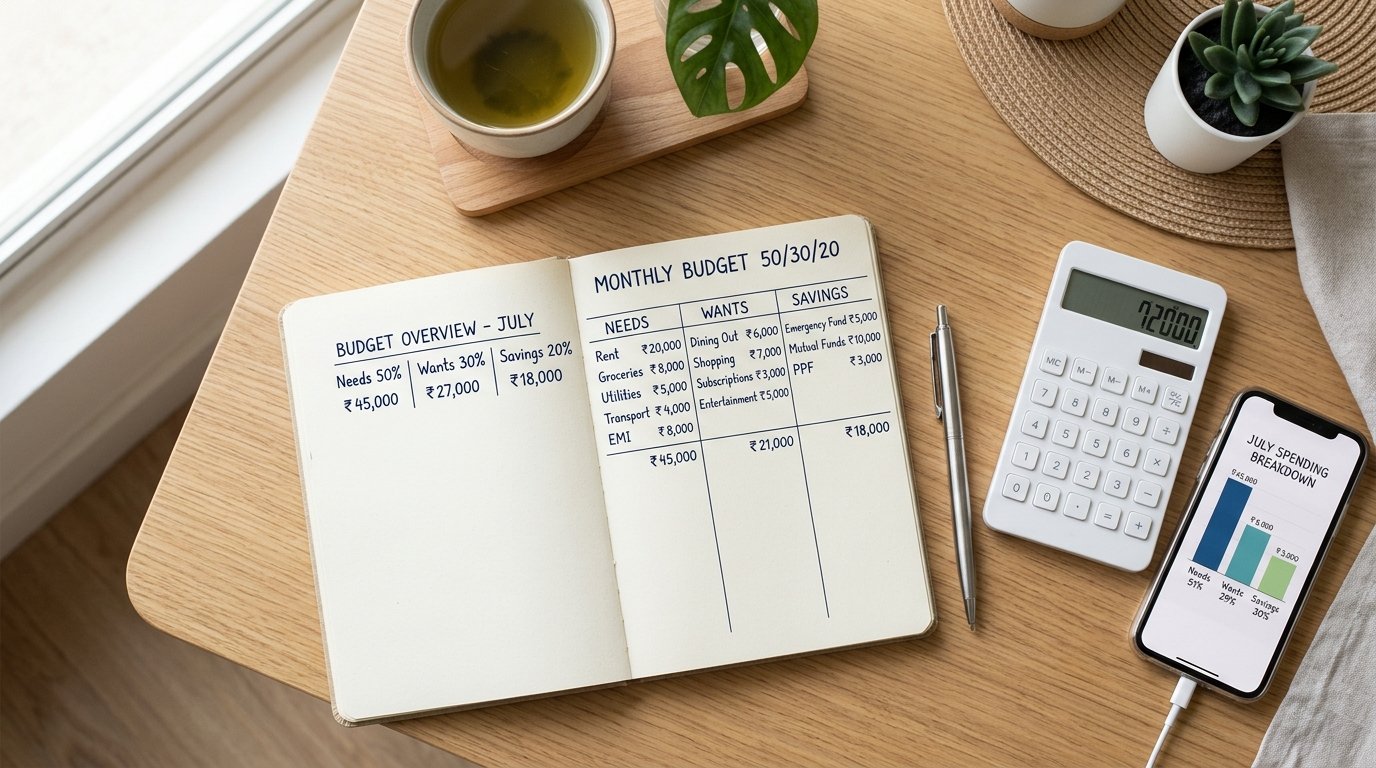
Most people think saving requires a bigger salary. In practice, it requires visibility and a few small rules. Here are 15 tips on how to save money on a monthly salary in India.
Set up the system
- Pay yourself first. Move savings out on salary day, before you spend.
- Automate it. A fixed monthly transfer beats willpower.
- Keep an emergency fund target. Many planners suggest three to six months of expenses, but start with one month.
- Name your goals. "Vacation ₹50,000" is easier to fund than "save more". See savings goals.
Find the leaks
- Track everything for 30 days. You cannot fix what you cannot see. Use a WhatsApp tracker.
- Watch small repeats. Chai, snacks and delivery fees add up.
- Check subscriptions. Cancel what you have not used in 30 days. See subscription tracking.
- Review the top three categories. Usually food, transport and shopping.
Spend smarter
- Use a 24-hour rule for non-essential purchases above a set amount.
- Plan groceries. A list reduces impulse buying.
- Compare before big purchases. Check price history and total cost, including EMI interest.
- Set category limits with
budget shopping 3000.
Protect your progress
- Use alerts. Warnings at 80% of a limit give you time to adjust. See budget alerts.
- Review weekly for 5 minutes. Small corrections beat big monthly surprises.
- Celebrate milestones. Reaching ₹10,000 saved is worth acknowledging.
Sample plan for a ₹30,000 salary
| Action | Monthly impact |
|---|---|
| Save ₹3,000 on day 1 | ₹3,000 |
| Cut two unused subscriptions | ₹400 |
| Cook at home 3 more days a week | ₹1,500 |
| Reduce impulse shopping | ₹1,000 |
| Total improvement | ₹5,900 |
Numbers are illustrative.
One last thing
Do not chase perfection. If you save 5% this month and 7% next, you are moving in the right direction.
For a structured plan, see how to make a monthly budget in India.
Find your leaks this month: start tracking on WhatsApp.